Platform to Presence: A Discreet Eight-Minute Train Practice for Leaving Work Behind
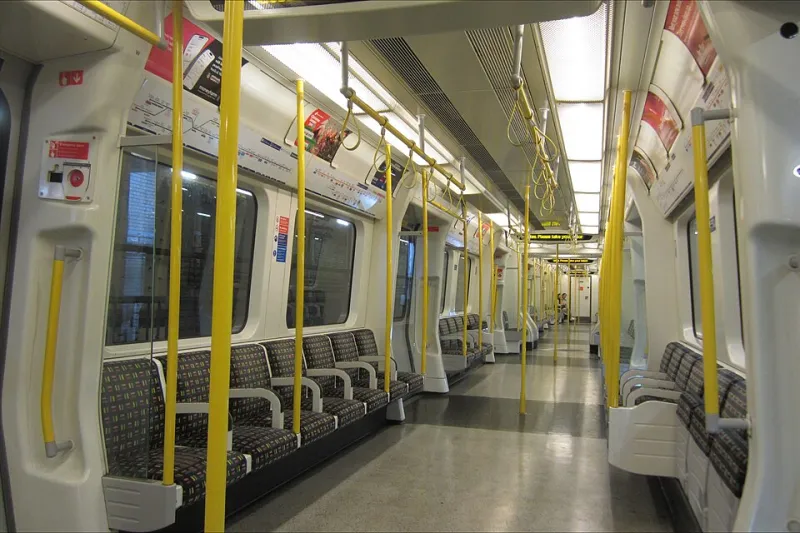
Photo: Bananaclippings, CC BY-SA 4.0, via Wikimedia Commons
There is a particular kind of tiredness that arrives on the platform at 5.47pm. It is not the clean tiredness of a long walk or a good workout. It is the frayed, screen-lit tiredness of a day spent being useful to other people. The train home can feel like the last lap of the working day, or it can become a small threshold between work and home. This practice is for the second option.
It is not a productivity hack. You are not trying to arrive home ready to cook a perfect meal, answer emails or become a better version of yourself. You are simply giving your body and mind eight minutes to notice that the working day is ending. The solar plexus — the manipura area around the upper abdomen — is a useful place to rest your attention because it is where many of us hold tension without realising it. But you do not need to believe in anything mystical for this to help. You just need a seat, a bag, and a willingness to be slightly less busy for a moment.
Before You Begin: A Note on Discretion
This is a train practice, not a studio practice. Keep your eyes open if closing them feels vulnerable. Keep your movements small enough that the person beside you would not notice unless they were watching very closely. Keep your hands in your lap, on your bag, or resting on your own ribs. You can do all of this with a winter coat on and a phone in your other hand. Nobody is expecting you to fold into a lotus position between Finsbury Park and Stevenage.
The Eight-Minute Sequence
Minutes 0–1: Land in the seat
Sit down properly if you can. Feel the backs of your thighs on the seat and your feet on the floor. Let your bag rest somewhere that does not pull your shoulder forward. Take one ordinary breath, not a big one. Notice the sounds around you: the announcements, the doors, the rain against the window, the low murmur of other people. You are not trying to block any of it out. You are simply arriving in the carriage you are actually in.
Minutes 1–3: Palm to solar plexus
Place one hand gently on your upper abdomen, just below the ribs. Let the hand be soft. Notice the natural movement of your breath there. Do not push your belly out or pull it in. If you cannot feel much, that is not a failure. Many of us have learned to hold the belly still for so long that the movement is subtle. Simply let your hand rest there and let the breath be as it is. This is not deep breathing. It is noticing breathing.
Minutes 3–5: Small side-body movements
Bring your right hand to your left ribs, just below the armpit. Keep the elbow close to your body and lean a few centimetres to the right. Breathe normally. You might feel a stretch along the left side of your torso. After two or three breaths, come back to centre and swap sides. The movement should be small enough to do while holding a bag or a phone. You are not performing a yoga pose for the carriage. You are reminding your ribs that they can move.
Minutes 5–6: A seated spinal wake-up
Let your chin drop slightly towards your chest, then roll your shoulders back and down. Turn your head gently to look over one shoulder, then the other, without twisting your whole body. Lift your chest by one per cent, not by straining. If your neck feels tight, make the movement even smaller. This minute is not about perfect posture. It is about interrupting the shape you have been holding since your last meeting.
Minutes 6–7: Grounding for delays
Press your feet into the floor. Feel the pressure travel up through your legs. Name three things you can see and two things you can hear. Unclench your jaw. Let your tongue rest away from the roof of your mouth. Drop your shoulders by a millimetre. If the train is delayed, you do not have to use the extra time productively. You can simply sit with your feet on the floor and let the delay be annoying without trying to breathe it away.
Minutes 7–8: Choose a word for home
Pick one word for how you would like to arrive home. It might be 'soft', 'present', 'enough', 'quiet' or 'off duty'. It does not need to be inspiring. Repeat it silently once or twice, then let it go. When the train pulls in, stand up slowly, check you have your things, and walk to the door. The practice ends when you step onto the platform. You do not have to carry it perfectly into the evening.
Adaptations for Real Commutes
Standing room only
If there are no seats, keep both feet hip-width apart and hold a rail with one hand. Press your heels down on each exhale. Make your side bends even smaller, or skip them entirely. You can rest one hand on your upper abdomen while holding your bag against your body. The practice is not cancelled because you are standing. It just becomes quieter.
Delays and cancellations
A delayed train is a very good place to practise not making things worse. You do not have to breathe your way into serenity while the departure board changes again. Put one hand on your solar plexus and let yourself feel frustrated. Then press your feet down and ask yourself what the next practical step is. That might be checking another platform, calling home, or simply sitting down. Breathwork is not a substitute for a plan.
Sensory overwhelm
If the carriage is loud, bright and full of perfume, deodorant and phone conversations, you are allowed to reduce the input. Earplugs, a hood, a fixed point on the window, or a palm pressed gently against your ribs can all help. You can skip the counting and the word at the end. Sometimes the most compassionate practice is to get off one stop early and walk the last part in the cold air.
If you only have two minutes
Put your feet on the floor. Put your hand on your upper abdomen. Take three ordinary breaths. Unclench your jaw. That is enough. You have still marked the transition.
After the Practice
The point is not to float home on a cloud of serenity. The point is to arrive as a person rather than a role. You may still be tired. You may still think about the email you did not send. But you have given yourself a small, repeatable signal that the working day is over. On the train home, that is enough.