The Lamp Left On: A Gentle Guide to Yoga Without Closed Eyes
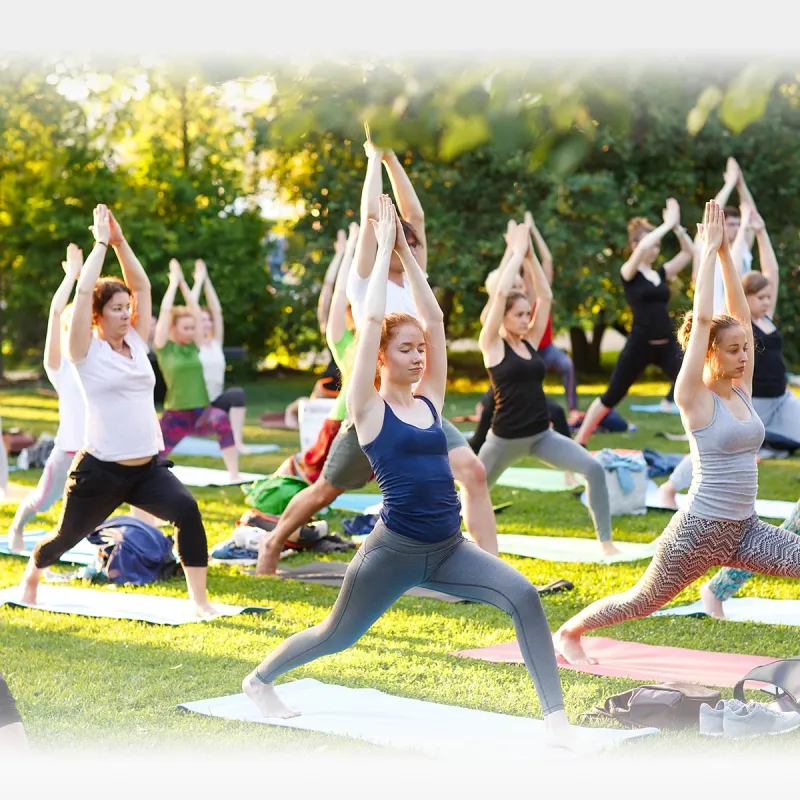
Photo: yoga class soft gaze eyes open community hall natural light, via nationaltoday.com
You are in a church hall in Sheffield. The radiators have just come on, someone is unrolling a mat a little too close, and the teacher says the familiar words: close your eyes. For plenty of people, that is a small relief. For you, it might be the moment the room tilts, the thoughts get louder, or you feel oddly exposed. None of that means you are bad at yoga. It means the cue needs a variation.
Why the eyes-closed instruction can land oddly
Closing the eyes is often offered as a shortcut to inward attention. But inward attention is not always a comfortable place to land. If you are neurodivergent, the shift in sensory input can be jarring: the room sounds different, your body feels different, and the usual visual anchors disappear. If you live with anxiety, shutting out the room can turn up the volume on internal chatter. If you have experienced trauma, a reduced field of vision can feel less like relaxation and more like losing track of your surroundings. Vestibular sensitivity, migraine, fatigue and plain old curiosity can all make eyes-open practice the kinder choice.
This is not a niche concern. In UK classes, from a leisure centre in Bristol to a community centre in Leeds, the instruction to close the eyes is so common that it can feel like a rule. It is not. It is one option among several, and the practice is big enough to hold them all.
The soft gaze is not a compromise
In yoga, the eyes-open alternative is often called a soft gaze, or drishti. It does not mean staring. It means letting the eyes rest on a point without gripping it. The lower lids soften, the forehead loosens, and the gaze becomes wide rather than sharp. You are looking, but you are not scanning. You are letting the room be there without having to manage it.
A soft gaze can be directed at the floor a metre or so ahead, at your own hands, or at a fixed point at eye level. It gives the nervous system something steady to lean on while the rest of the practice unfolds. For many practitioners, it is not a lesser version of closing the eyes. It is simply a different door into the same quiet room.
Four eyes-open alternatives to try
- A fixed point at eye level. Choose something ordinary: a plant, a crack in the paintwork, a candle, the corner of a window. Let your gaze rest there lightly. If your eyes drift, come back without commentary.
- Keep a lamp on. Dim lighting is not the same as darkness. If your teacher dims the room, ask whether one lamp can stay on. A small pool of light can make the difference between settling and bracing.
- Look at your own hands. Resting the gaze on your hands in your lap or at your heart gives you a close, safe anchor. It is especially useful in seated breathwork or in the early moments of a practice.
- Try a half-lidded gaze. Let the eyelids lower without closing completely. The room becomes soft and blurred, but you remain visually connected to it. This can feel like a middle path when full eyes-open feels too stimulating and eyes-closed feels too much.
A short eyes-open sequence for steady ground
This is a five-minute practice you can do at home, in a class, or in the ten minutes between the school run and the rest of the day. It is designed for eyes open throughout, with a soft gaze and no need to close them at any point.
- Arrive and look around. Sit or stand comfortably. Let your eyes move slowly around the room, naming three things you can see. Notice the colour of the walls, the shape of a window, the texture of your mat. Let the room be familiar.
- Soften the gaze. Choose one point at eye level or slightly below. Let your eyes rest there. Feel your feet on the floor and your breath moving in and out. Stay for five breaths.
- Shoulder rolls with a wide gaze. Inhale and roll the shoulders up towards the ears. Exhale and let them slide back and down. Keep the gaze soft and the jaw loose. Repeat five times.
- Seated twist with your hands on your ribs. Sit tall. Inhale, lengthen. Exhale, turn gently to one side, keeping the gaze forward or slightly down. Stay for three breaths. Return to centre and change sides.
- Palms together at the chest. Bring your hands together in front of your heart. Let your eyes rest on your fingertips. Feel the small pressure of palm against palm. Stay for five breaths, then let your hands drop.
- Pause before you move. Before you get up, notice what has changed. Maybe nothing has. Maybe your shoulders are a little lower. Either way, you have practised with your eyes open, and that counts.
If you are a teacher: cues that include rather than assume
The simplest change is in the language. Instead of everyone close your eyes, try: if it feels comfortable, you might close your eyes, or keep a soft gaze on a point in front of you. Offer the options before the practice begins, not as an afterthought. Normalise eyes-open practice by doing it yourself sometimes. Keep one lamp on if you dim the room. Avoid words like just and should, which can make a variation sound like a failure.
It also helps to remember that you do not need to know why someone has chosen to keep their eyes open. They might be neurodivergent, anxious, trauma-experienced, visually impaired, or simply not in the mood. The invitation is what matters, not the reason.
If you are a student: simple words to use
You do not owe anyone an explanation. A short sentence is enough: I will keep my eyes open today. Or: could we have a soft gaze option? Or: I find closing my eyes distracting, so I will focus on a point. A good teacher will welcome it. If they do not, that is useful information about the class, not about you.
The room is big enough for both
Yoga is about noticing, not performing. Closing the eyes is one way to notice. Keeping them open is another. At Manipura Yoga, we like to leave the lamp on, offer the choice, and let the practice meet you where you are.