Perfectly Still Is Not the Point: A Standing Balance Sequence for Swaying Bodies

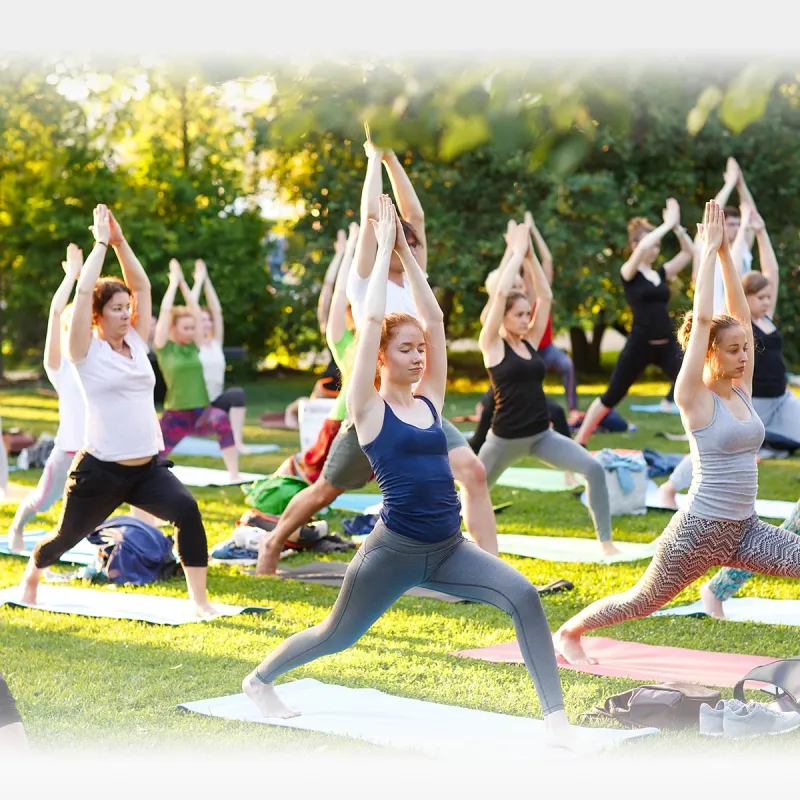
Photo: Pitambar Yadav(Google), CC0, via Wikimedia Commons
Somewhere along the way, balance got sold to us as stillness. A photograph of a person on one leg, face serene, no visible effort. The message is that good balance means not moving. But anyone who has actually stood on one leg in a kitchen while waiting for the kettle knows the truth: balance is a series of tiny adjustments. The wobble is not a failure. It is the practice.
Why your body sways
Your feet are constantly sending information to your brain about where you are in space. Your ankles make micro-corrections. Your breath changes the tone of your diaphragm and your belly. Your solar plexus, the soft centre below your ribs, is part of how you sense effort and steadiness. When you stand on one leg, all of these systems talk to each other. Sometimes they disagree. That is normal.
Balance also changes from day to day. It is different on a carpet, on a tiled floor, in socks, in stiff shoes, after a long desk day, after a poor night's sleep. It is not a fixed personality trait. It is a skill that responds to context.
The practice: eight minutes, standing
You will need a wall, a sturdy chair, or a kitchen counter within reach. Bare feet or grippy socks are safer than smooth socks on carpet. Clear a small space. If you feel dizzy, stop and sit down.
1. Find your ground (one minute). Stand with your feet hip-width apart. Let your knees be soft, not locked. Rock gently forward and back, then side to side, like a tree in a light breeze. Let the movement get smaller until you find a middle place. You are not trying to freeze. You are listening.
2. Heel raises (one minute). Keep your fingertips on the wall or chair. Inhale and lift both heels slowly. Exhale and lower them with control. Repeat eight times. If your ankles feel stiff, make the lift smaller and pause at the top for one breath. This warms the feet and ankles without asking for a performance.
3. Weight shifts (one minute). Shift your weight slowly to the left foot. Let the right foot become light, then lift it just off the floor. Stay for two breaths. Place it down. Repeat on the other side. Do this three times each side. If you need to keep a hand on the wall, do. The point is the shift, not the lift.
4. Supported tree (two minutes). Stand beside your wall or chair. Place your left foot on your right ankle or calf, never on the knee. Keep your right foot rooted. Bring your hands to your solar plexus. Take three slow breaths. If you wobble, let the standing foot make its adjustments. Then step down and change sides. If this feels too much, simply stand with feet together and close your eyes for three breaths, holding the wall.
5. Breath to the centre (one minute). Stand with feet hip-width. Bring both hands to your lower ribs. Inhale and feel the ribs widen. Exhale and feel the belly soften. Repeat five times. Let your shoulders drop on each exhale.
6. Step it out (one minute). March slowly on the spot, lifting each foot just a little. Let your arms swing naturally. Notice how your balance feels now compared with the start. It may not be better. It may just be more familiar.
Adaptations for real rooms and real bodies
If you have stiff ankles, keep the heel raises tiny and hold the wall. If you are on carpet, go barefoot or wear grippy socks; smooth socks on carpet can slip. If you have a long desk day, keep your knees soft and avoid locking them. If you are tired, use the chair for the tree pose and skip the weight shifts. If you have vertigo, dizziness, or a condition that affects balance, please check with a health professional before trying standing balance work.
The wobble is the information
A perfect still balance is not the goal. The goal is to notice the small corrections your body makes and to let them happen without criticising them. Some days you will feel steady. Some days you will feel like a shopping trolley with a bad wheel. Both are information. Both are practice.
Manipura Yoga is not here to grade your balance. We are here to help you stay curious about it. Stand near a wall, breathe, sway, and let the wobble be part of the sequence.