The Belly Is Not the Problem: Kind Core Cues for Real Bodies in UK Yoga
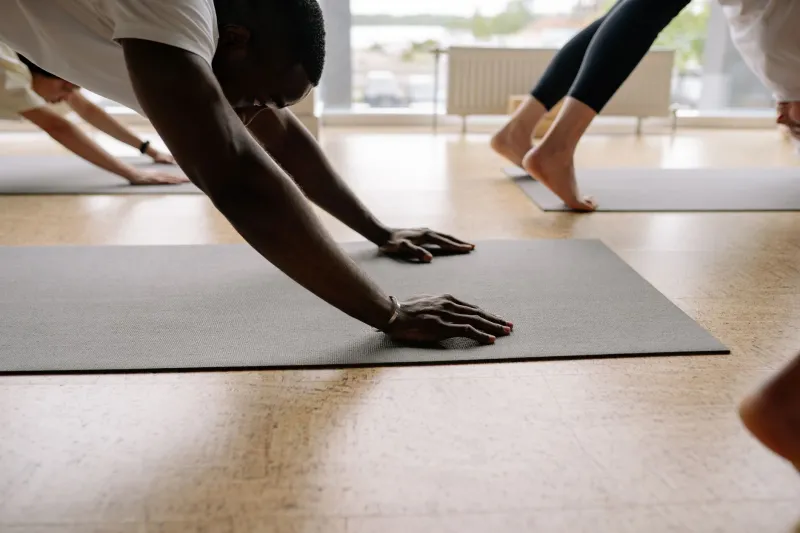
Picture a village hall in November. The radiators are ticking, someone is still in their coat, and the teacher invites everyone to 'engage the core' because, as they put it, summer is coming. It is not a cruel comment. It is usually a habit, borrowed from fitness culture and delivered with good intentions. But language lands. In a room of real British bodies, it can land as a quiet instruction to apologise for the belly you brought through the door.
At Manipura Yoga, we are not interested in pretending that core work has no place in yoga. It does. The solar plexus area, the region around the lower ribs and upper abdomen, is where many of us feel effort, breath, digestion, nerves and steadiness all at once. The question is not whether we work there. The question is what story we tell while we do it.
What flat-tummy language actually does
The trouble with flat-tummy language is not that it mentions the body. It is that it narrows the body to a shape. A student arrives after a desk shift, a school run, a pregnancy, surgery, menopause, chronic pain, or simply a lifetime of being told their middle should be smaller. They hear 'flat tummy' and immediately begin to manage themselves. The ribs may lift, the breath may shorten, the belly may be held in. What looks like core work becomes a low-grade performance of being acceptable.
This is especially awkward in UK yoga settings, where classes often happen in church halls, sports centres and community rooms full of people who are not there for a beach body. They are there because their back aches, because they cannot sleep, because they want an hour that belongs to them. A cue that promises a flatter stomach can make the mat feel like another place to be assessed.
Kindness is not the same as vagueness. We can still teach strength, support and good alignment. We can still invite effort. But we can do it without implying that the body is a problem to be corrected before practice can begin.
Manipura without the makeover
The solar plexus is often associated with confidence, willpower and digestion. Those metaphors can be useful, but they can also turn into a self-improvement project. If Manipura is the city of jewels, then a city has many buildings, side streets, worn steps and ordinary kitchens. It is not one showroom. Core work can be a way of meeting that whole city, not renovating it for visitors.
In practical terms, this means shifting from suction to support. Instead of 'pull your navel to your spine', try 'notice the front, sides and back of your belly'. Instead of 'squeeze', try 'feel a gentle resistance as you breathe out'. Instead of 'this is where we burn the mince pies', try 'this is where we find a little more steadiness'. The body often responds better to invitation than to accusation.
Cues that invite support, not shame
A few swaps can change the whole atmosphere of a class. Invite students to feel their feet or sitting bones first. Ask them to let the breath move before they add effort. Offer a hand on the lower ribs and a soft exhale, rather than a hard grip. Say 'support' and 'steady' more often than 'tight' or 'flat'. Name sensations rather than shapes: warmth, wobble, effort, ease, space.
Chair options matter. A seated student can place both feet on the floor, hands on the lower ribs, and practise a gentle exhale while feeling the belly soften and the ribcage settle. Someone with a stiff back might prefer lying on their side with a bolster, or standing with hands on a wall. A student with low energy can do less and still be included. The cue is not the pose. The cue is the invitation to notice.
Teachers can also offer variations before anyone has to ask. Demonstrate with a soft belly and a supported spine. Avoid using weight loss as motivation. If you are working with pregnancy, recent surgery, pelvic health concerns or diastasis recti, signpost qualified support rather than pushing through. Choice is part of the practice.
A small journaling pause
Because this is Manipura work, it can be useful to write things down. Before class, ask: where do I tend to grip in order to belong? After class, ask: what did support feel like today, and where did I find it? A third prompt: what would change if I stopped treating my belly as a draft version of itself? These are not tests. They are ways of listening.
For teachers, a few quiet swaps
Try 'let us invite some steady support' instead of 'fire up the core'. Try 'you might feel heat or effort here; choose less if you need to' instead of 'this burns'. Try 'strong, supported middle' instead of 'flat tummy'. Try 'notice your breath and your base' instead of 'pull your navel in'. Small words travel a long way in a chilly hall.
The great British belly is not a national emergency. It is a belly. It has carried you through winters, cups of tea, desk days, maybe children, maybe grief, maybe nothing more dramatic than lunch. Core work can be a place to meet yourself with steadiness. That is a far kinder argument, and a far better class.